First visits start from scratch
Medical history, medication list and previous findings are asked for and collected during the appointment. That time is lost for patient information and therapy planning.
Patients record their medical history and medication before the first appointment. Between check-ups they report symptoms and side effects, myon.clinic evaluates them and reports risks to your team. For chemotherapy, oral anticancer therapy, immunotherapy and hormone therapy.
Days or weeks pass between two check-ups. What happens in that time often only reaches the care team at the next appointment, and the first visit often starts with gathering documents.
Medical history, medication list and previous findings are asked for and collected during the appointment. That time is lost for patient information and therapy planning.
Side effects develop at home. Without structured capture, they are only discussed at the next appointment or lead to unplanned contacts.
With oral anticancer therapy, patients take their medication themselves. The team only sees intake and tolerability if they are reported.
Before the first appointment, patients receive a link or QR code and enter their information calmly at home. Your team sees the results in the dashboard before the consultation.
Patients complete short questionnaires on symptoms and side effects at fixed intervals. myon.clinic evaluates every answer and reports abnormal findings to your team.
The process stays the same: prepare, capture between check-ups, report risks. What is asked and how often depends on the therapy. We support patients after radiotherapy in aftercare.
Support between cycles: nausea, fatigue, mucosal and skin problems as well as warning signs are captured and assessed regularly.
Check-ins in step with the cyclesFor therapies taken at home: reminders, questions on intake and tolerability, and a direct line to the team when something is not right.
Support without fixed appointmentsImmune-related side effects can appear with a delay, even after therapy ends. Regular check-ins make changes to the skin, bowel or general well-being visible early.
Also beyond the end of therapyHormone therapies often run for years. Regular check-ins capture side effects such as hot flushes, joint pain or mood swings and support adherence.
Support over long periodsTwo views for your team: the overview of all patients in therapy and the detailed view of one person.
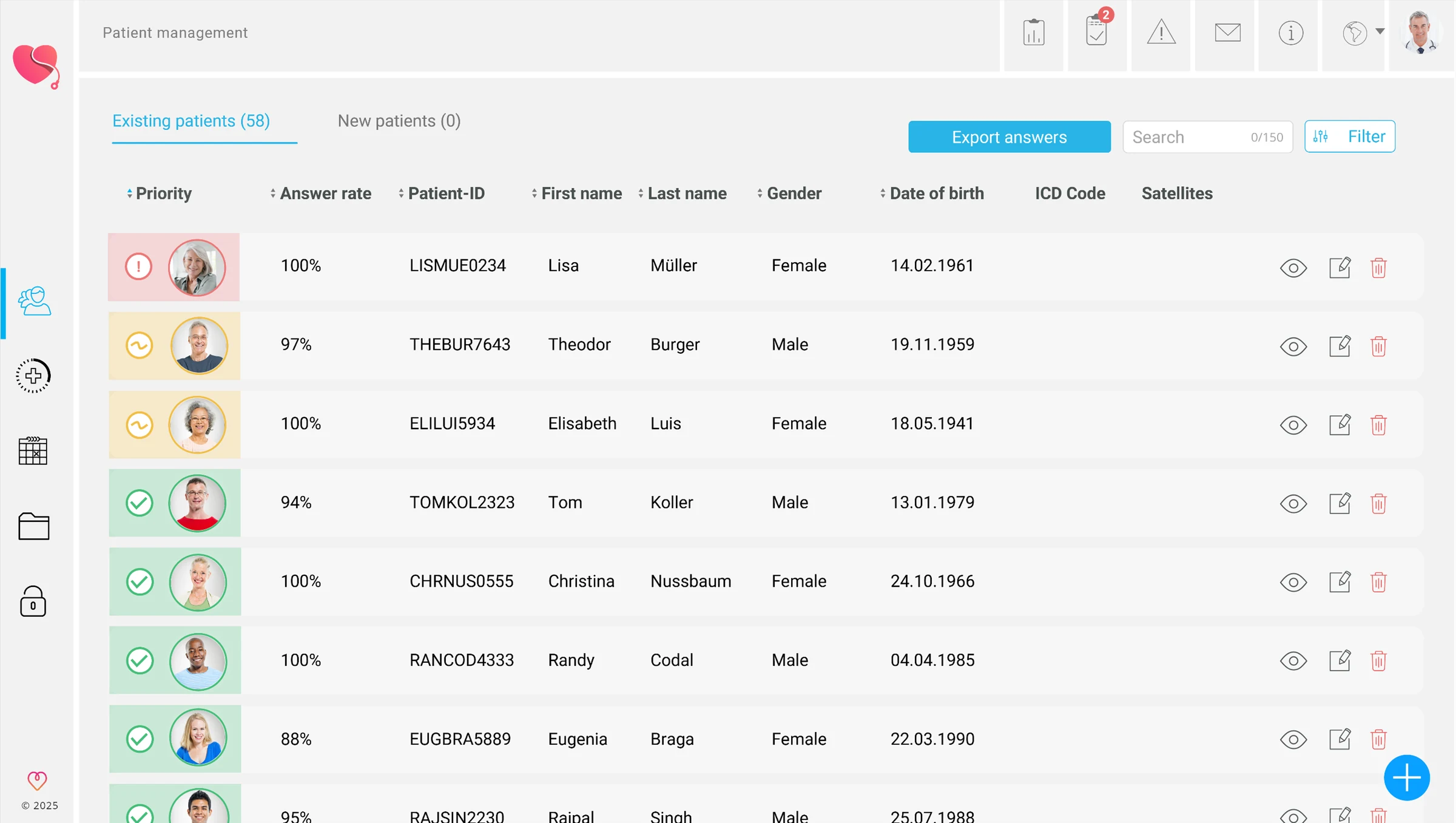
All patients in therapy in one list, sorted by priority. The traffic light shows who has reported abnormal values, the answer rate shows who is completing their questionnaires. Before every check-up, your team sees where to act.
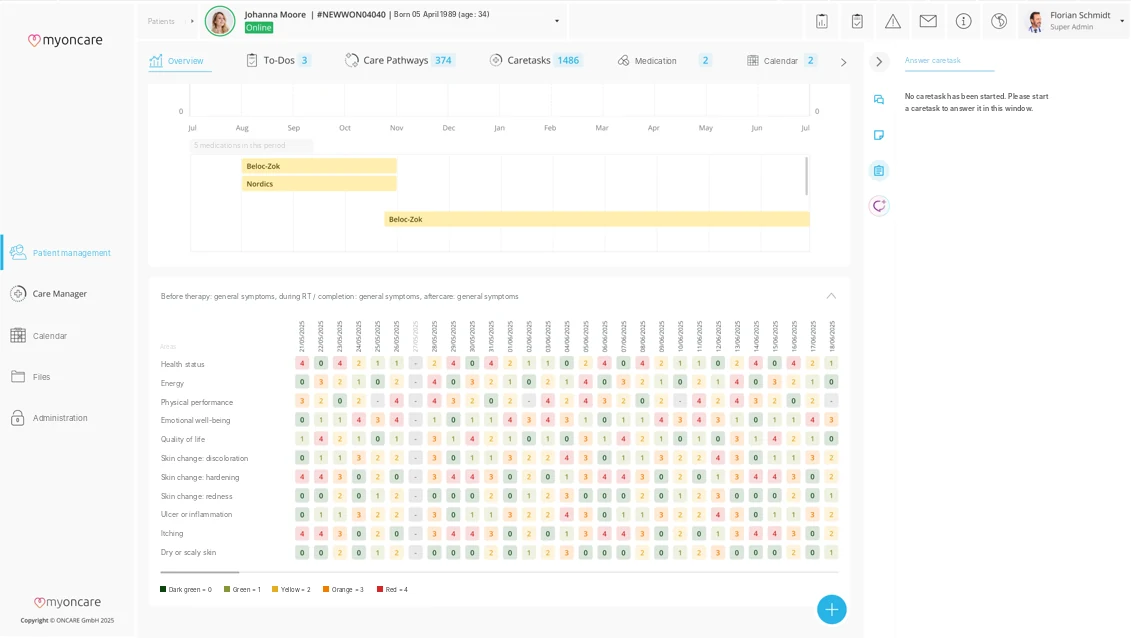
One person's course across the entire therapy: medication over the period and, below it, every answer from the questionnaires, from before therapy through the check-ups into aftercare. Changes between two appointments are visible at a glance.
Every answer is checked against thresholds. As a class IIa medical device under the MDR, myon.clinic can triage automatically on this basis and report in real time.
Treatment decisions stay with you. myon.clinic monitors and escalates. Patients receive clear guidance on what counts as an emergency. Monitoring does not replace acute care.
Values are within the expected range. Support continues automatically.
A value is abnormal. Additional questions or contact follow.
Your team receives the report immediately, with a structured summary, course and recommended urgency.
Together we decide which types of therapy and processes you want to support digitally.
Your site including care pathways and check-in schedule. No integration effort on your side.
Patients start before the first visit via QR code or link. Your team sees results and abnormal findings in the dashboard.
A tested foundation, clear responsibility.
myon.clinic runs on the myoncare platform, a class IIa medical device under the MDR. Medical decisions are always made by the treating medical team.
ISO 27001 · ISO 13485 · C5 Type 2 · GDPR-compliant
For chemotherapy, oral anticancer therapy, immunotherapy and hormone therapy. We support patients after radiotherapy in aftercare, with care pathways for 9 radiotherapy regions.
Through traffic-light logic with thresholds. Green means stable. Yellow triggers additional questions or contact. Red leads to immediate escalation to your practice or hospital, with a structured summary, course and recommended urgency.
The treating physician. myon.clinic monitors and escalates. Patients receive clear guidance on what counts as an emergency. Monitoring does not replace acute care.
Results are available in the dashboard as structured reports. Digital reports can be sent easily and securely to your hospital or practice management system.
A smartphone, tablet or laptop with an internet connection. They start via QR code or link, for example with the appointment confirmation before the first visit.