Aftercare runs for years
Organising appointments, reminders and questionnaires over a long period ties up staff who are missing from ongoing care.
myon.clinic supports patients after therapy for up to 12 years, with a fixed recall plan and aligned PROMs. myon.clinic reports abnormal findings to your team. As a licence or as aftercare-as-a-service.
After therapy, a phase begins that lasts for many years. Late effects and recurrences can occur long after the last appointment, and aftercare should be organised and documented without gaps until then.
Organising appointments, reminders and questionnaires over a long period ties up staff who are missing from ongoing care.
Changes often develop gradually and at home. Without regular check-ins, they only become visible when patients come in of their own accord.
After radiotherapy, the German Radiation Protection Ordinance and Euratom require documented follow-up care. For other therapies, it provides the data for quality assurance and certification.
myon.clinic sets up the aftercare pathway with a recall plan, reminds patients, evaluates their answers and only reports what needs your attention.
The plan is based on therapy, tumour type and risk and defines when patients receive which questionnaires. Reminders run automatically, for up to 12 years.
Questionnaires aligned with DEGRO and developed by University Medical Centre Mannheim, covering symptoms, late effects and quality of life.
Every answer is assessed with traffic-light logic. Abnormal findings go to your team with a summary and course.
Every follow-up is documented in a structured way: after radiotherapy as evidence for the follow-up obligation, for other therapies for quality assurance.
The myon.clinic recall engine builds the aftercare plan from three factors: tumour type, preceding therapy and individual risk.
Which questionnaires, at which intervals, over which period. Shorter intervals at first for acute side effects, longer ones later for late effects.
Aftercare does not only ask about recurrence. The questionnaires also capture how patients are doing in everyday life and make changes visible over years.
For your patients
Regular check-ins provide reassurance: the care team keeps an eye on their health even years after therapy. Simply via app, on a smartphone, tablet or laptop.
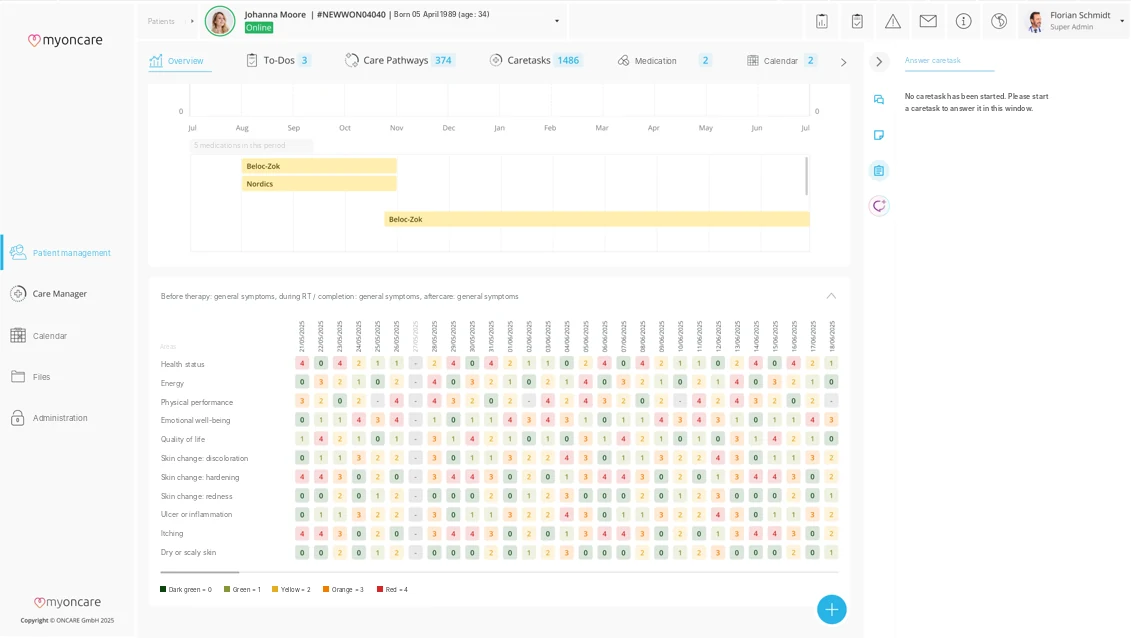
Every questionnaire answer over time, from before therapy into aftercare. Changes are visible at a glance.
You decide who provides digital aftercare: your own team or the virtual aftercare clinic from myon.clinic.
You run aftercare on your own site. Your care team monitors the patients, myon.clinic provides the pathway, recall plan and triage.
You refer patients to myon.clinic. Our team sets up the pathway, supports the patients and escalates to your team if something is abnormal.
Suitable for patients at low to medium risk. Not for patients with a high risk of recurrence or toxicity, or after complex radiochemotherapy.
 2nd prizeMSD Health Award 2026
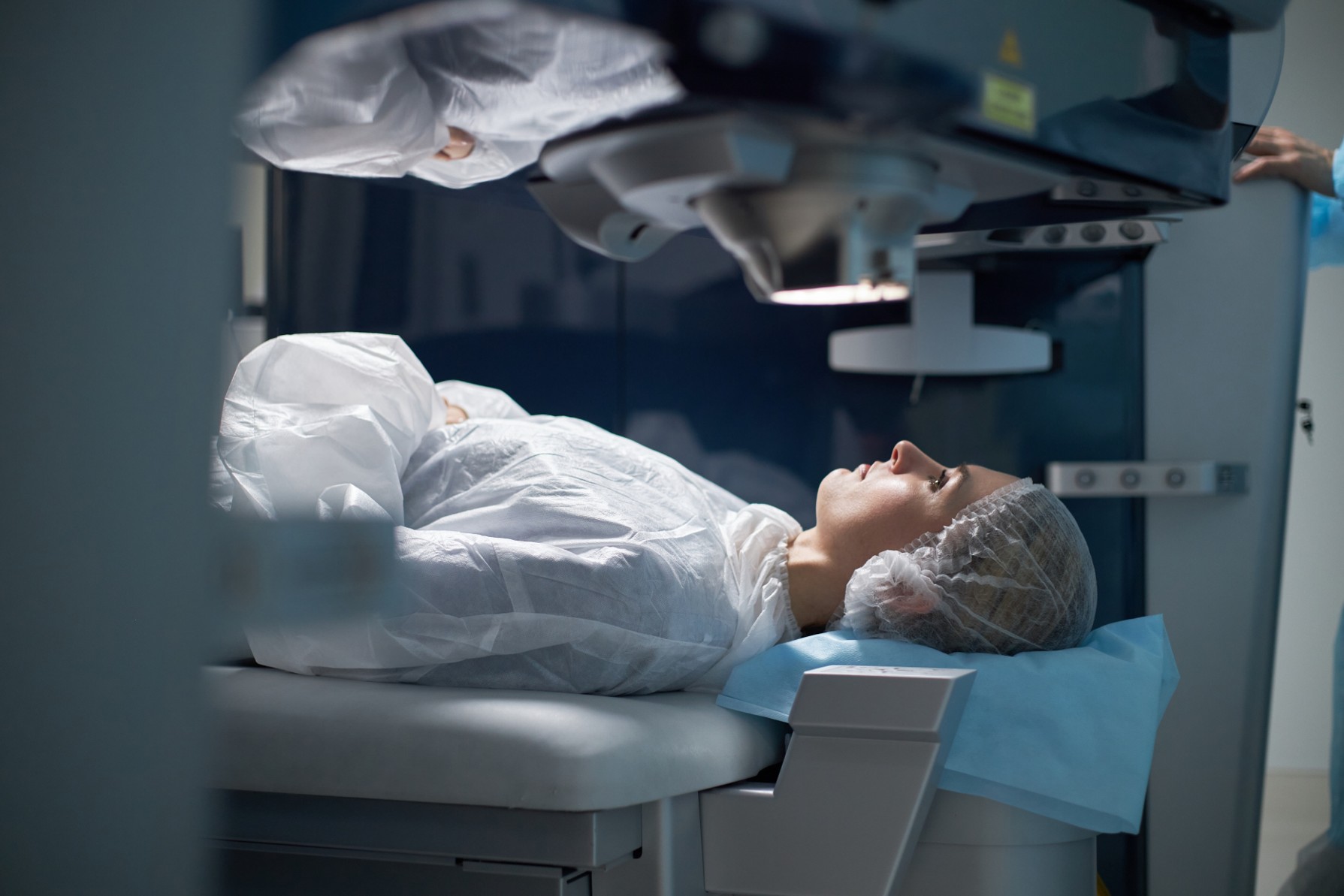
Together with the Department of Radiation Oncology at University Medical Centre Mannheim (UMM), myon.clinic supports patients after radiotherapy. A baseline is captured before therapy, and check-ins follow from the last day of radiotherapy: first at short intervals for acute side effects, later at longer intervals for late effects.
For this project, we received 2nd prize at the MSD Gesundheitspreis (MSD Health Award) 2026.
Licence model or aftercare-as-a-service. Together we work out what suits your hospital or practice.
Your site including aftercare pathway and recall plan. No integration effort on your side.
Patients start at the end of therapy via QR code or link. You see abnormal findings in the dashboard.
We monitor and escalate. Treatment decisions stay with you.
myon.clinic provides the digital support and reports abnormal findings. Medical decisions are always made by the treating medical team.
Based on the myoncare platform, a class IIa medical device under the MDR.
After radiotherapy, aftercare is mandatory under the German Radiation Protection Ordinance and the Euratom directive. myon.clinic supports it with structured, documented aftercare in which every check-in and every response is traceable. For other therapies, the same documentation serves quality assurance.
Structured monitoring is possible for up to 12 years. The recall plan defines when patients receive questionnaires, depending on therapy, tumour type and risk.
If you have your own care team to look after patients, the licence model fits. If you want to hand over digital aftercare, the virtual aftercare clinic from myon.clinic takes it on, for patients at low to medium risk.
Traffic-light logic with thresholds applies. Yellow triggers additional questions or contact. Red leads to immediate escalation to your practice or hospital, with a structured summary, course and recommended urgency.
In the licence model, via billing along the pathway, via private insurance or as a self-pay service (IGeL). We will work out together which route suits your centre.