Oncology

Cancer care that continues between appointments.

myon.clinic supports oncology patients digitally: from baseline screening through therapy to long-term aftercare. With ready-made care pathways on the myoncare platform and minimal effort for your team.

Illustrative example of a patient journey in three phases and three layers: patient, myon.clinic and care team. From the start of therapy, the patient completes the baseline screening digitally, ideally repeated every quarter. myon.clinic evaluates the four areas automatically, identifies the need for support and reports each of the four areas to the right team: psycho-oncology for psychosocial distress, symptom management for physical symptoms, nutritional counselling for malnutrition risk and social services for social and legal questions. During therapy, for example chemotherapy, a baseline and check-ins in every cycle follow. In the second cycle a value is above the threshold, myon.clinic triggers an alert and informs the care team. In aftercare, check-ins follow at fixed intervals for up to twelve years. In year two, myon.clinic reports an abnormal trend as a possible late effect to the care team and aftercare.
Patient journey

Digital support in every phase.

Each phase is available as a programme of its own. Combined, they provide continuous support from diagnosis to aftercare.

  1. From the start

    Baseline screening

    The baseline screening required by the German Cancer Society (DKG) as a digital module: from the start of therapy and ideally repeated every quarter, with standardised capture and structured reports.

    • Questionnaires for all four dimensions
    • Automatic evaluation in real time
    • Reports with abnormal values flagged
    Baseline screening
  2. During therapy

    Therapy support

    Support during chemotherapy, oral anticancer therapy, immunotherapy or hormone therapy. With regular check-ins and information for patients.

    • Baseline before therapy starts
    • Symptom and side-effect monitoring
    • Alerts for abnormal results
    Therapy support
  3. After therapy

    Aftercare

    Automated long-term aftercare that captures late effects and changes in a structured way over years.

    • Regular follow-ups on a fixed schedule
    • Early detection of recurrence and late effects
    • Support for the follow-up obligation after radiotherapy
    Aftercare
The challenge

Cancer care does not end at the clinic door.

Between diagnosis, therapy and aftercare there are often weeks without direct contact. That is exactly where problems arise that the care team only sees late.

Symptoms stay invisible between appointments

Side effects, pain or psychological distress often appear at home and are only discussed at the next appointment.

Screening and documentation take time

Paper forms, manual evaluation and inconsistent documentation tie up staff. At the same time, requirements for certified centres are increasing.

Aftercare runs for many years

Late effects and recurrences can occur long after therapy. Structured aftercare over years is hardly possible without gaps on paper.

Benefits

What digital support in oncology achieves.

For your centre
  • Respond earlier

    Automated monitoring with PROMs makes side effects, recurrences and late effects visible earlier.

  • Less effort

    Questionnaires are captured digitally and evaluated automatically. Reports can be sent to your hospital or practice management system.

  • Prioritised overview

    Abnormal values are flagged, so you can see which patients need attention first.

  • Structured data

    Longitudinal data over long periods supports quality assurance, certification and outcome analysis.

For your patients
  • Well informed

    Clear information and tips about the therapy, exactly when they are relevant.

  • Not alone

    Regular check-ins provide reassurance: the care team keeps an eye on their health.

  • Easy to use

    Start via QR code or link, usable on a smartphone, tablet or laptop.

How the support works

In three steps from the app to aftercare.

Capture via app, physician dashboard, long-term aftercare. Shown here using prostate cancer as an example.

Step 1 · Capture via app

Patients complete questionnaires.

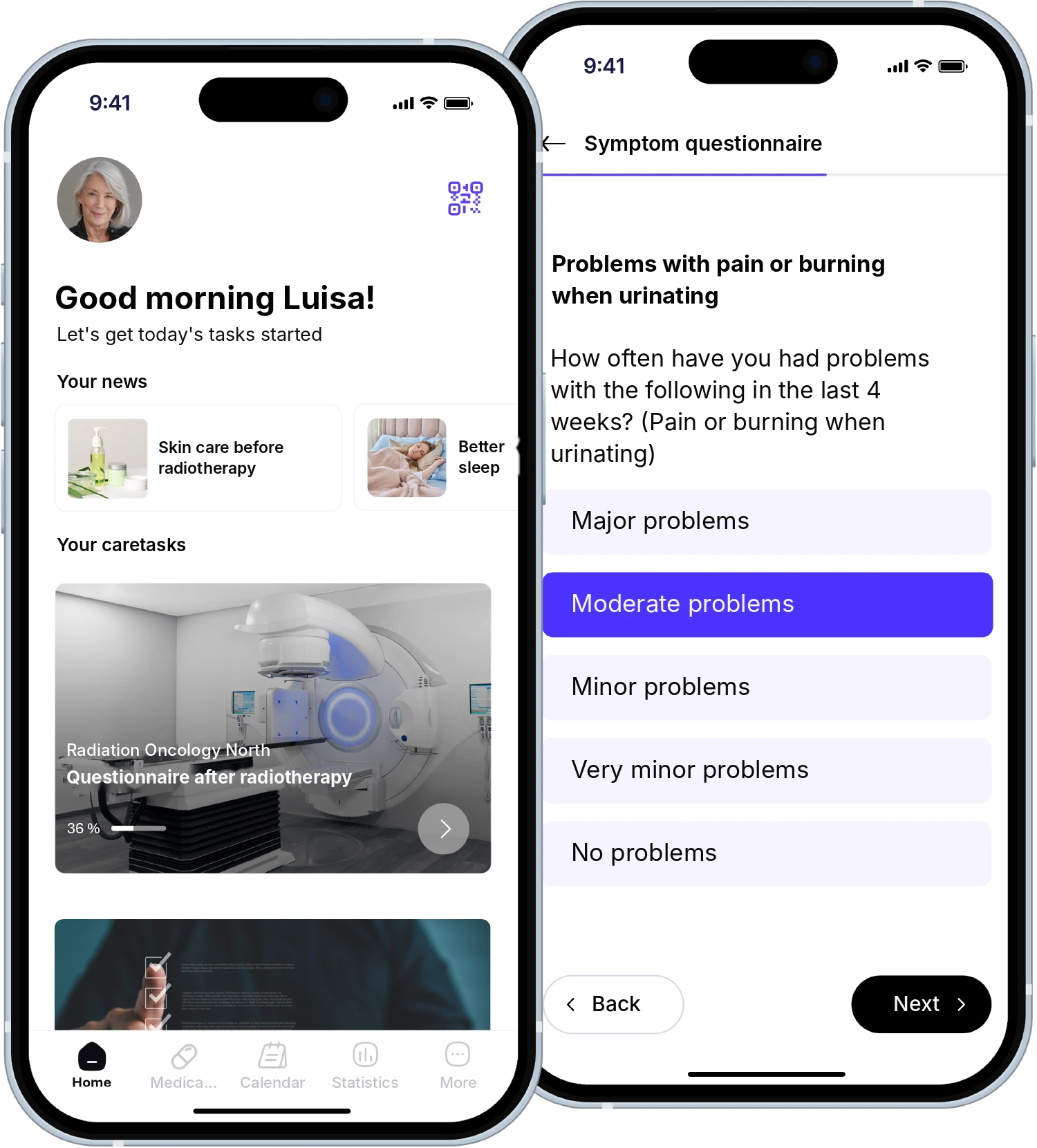
In the app, patients complete short questionnaires on symptoms and the course of therapy at regular intervals. Easy to understand and done in a few minutes.

  • Regular, validated questionnaires
  • Symptoms and course of therapy captured in a structured way
  • Easy to use, including for older patients
For patients

Patients can report problems early and do not feel left alone. This strengthens safety and quality of life.

Patient app with a symptom questionnaire after radiotherapy
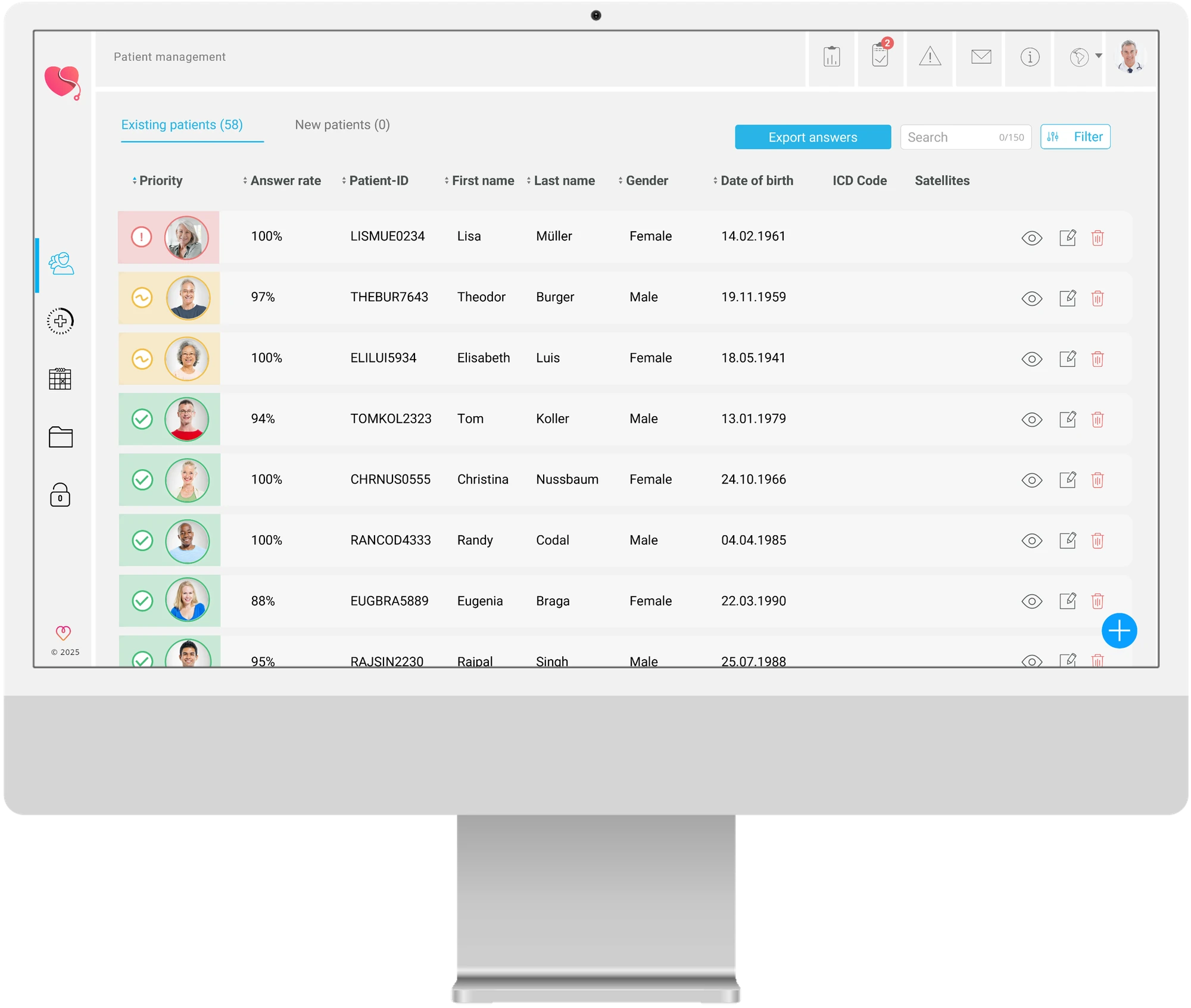
Step 2 · Physician dashboard

Continuous data instead of snapshots.

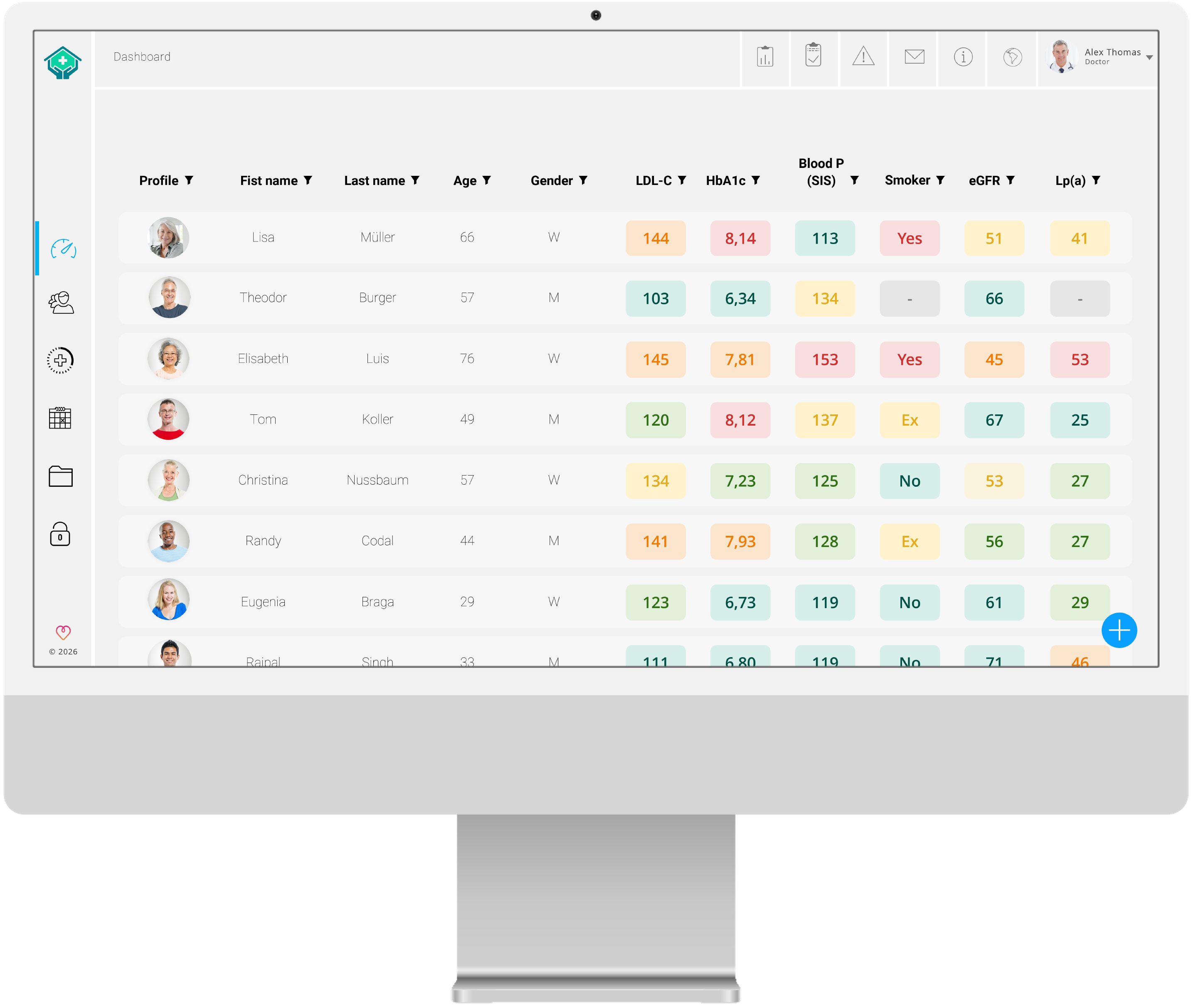
Data is captured continuously and displayed clearly in the dashboard. Abnormal results can be seen at a glance.

  • Triaged dashboard with traffic-light logic (green, yellow, red)
  • Real-time alerts for abnormal results
  • Data-driven care across all treatment phases
For clinicians

Clinicians receive structured, continuous data and are alerted to relevant problems.

Physician dashboard with a triaged patient overview
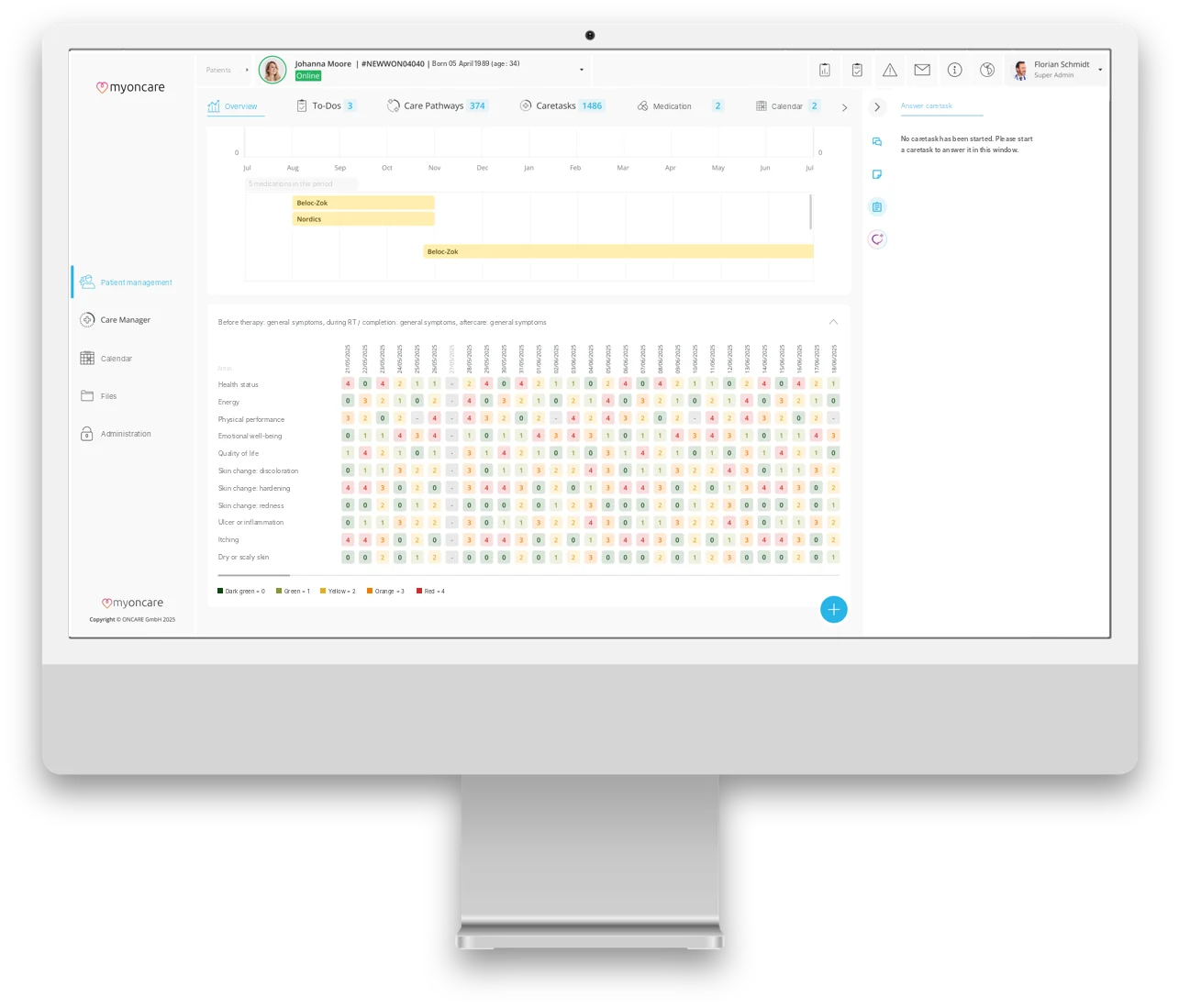
Step 3 · Long-term aftercare

Aftercare: digital, not on paper.

In digital aftercare, patients are supported over many years, so risks and side effects can be detected early.

  • PROM-based monitoring over years
  • Early detection of recurrence and late effects
  • Support for the follow-up obligation (German Radiation Protection Ordinance / Euratom)
For clinicians

Digital, long-term aftercare with structured documentation and insight into the course at any time.

Long-term aftercare view in the dashboard
Connected care

A network around the patient.

Cancer care is teamwork. Connect referring physicians, tumour centre, radiotherapy, diagnostics and aftercare, and create a shared data basis for everyone involved.

  • Integrate tumour centres into regional care
  • Set individual permissions for everyone involved
  • Everyone involved sees the current course of their patients

Connected via the myoncare platform

Example

Aftercare after radiotherapy.

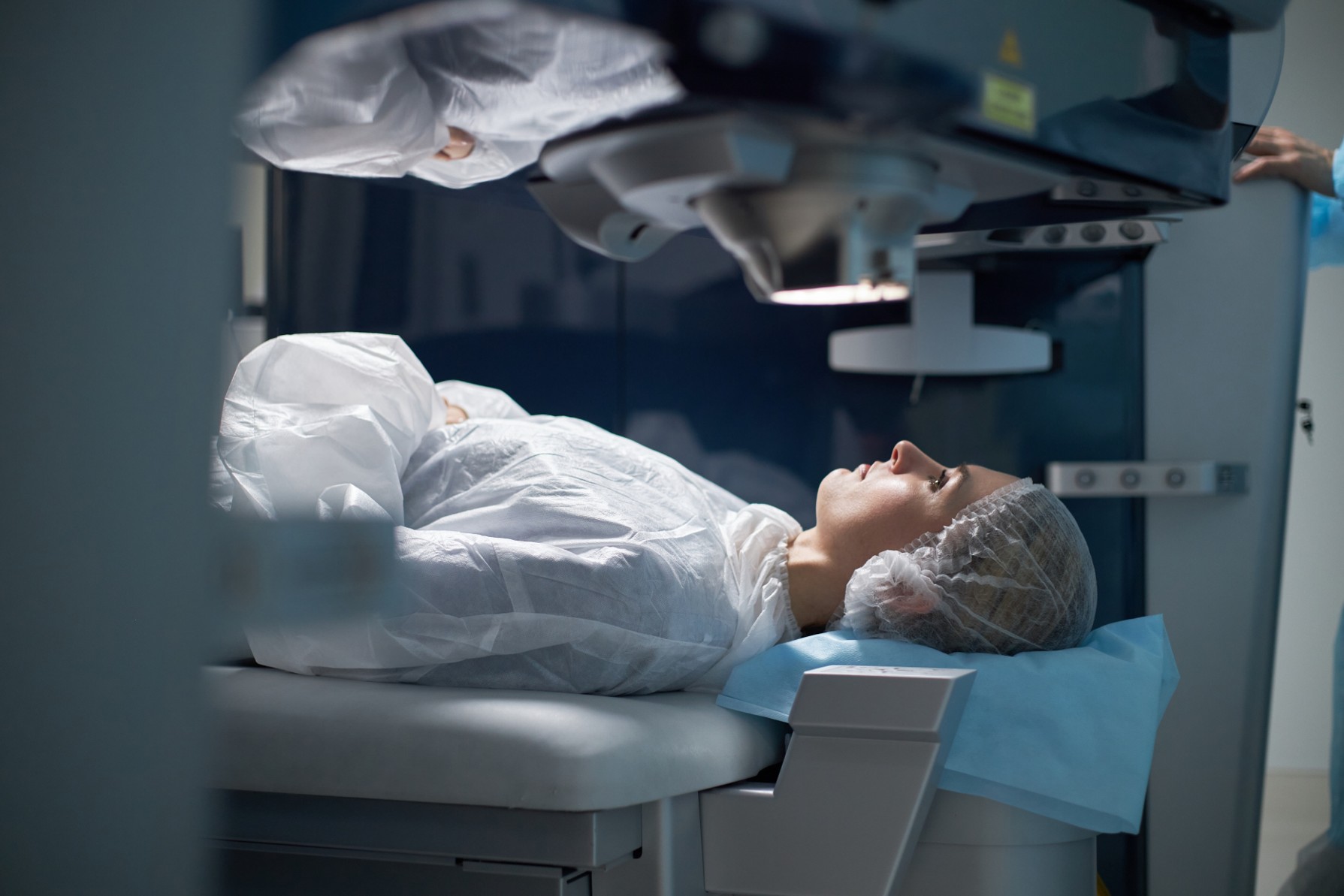
The care pathway captures a baseline before radiotherapy and supports patients in aftercare from the last day of radiotherapy: first at short intervals for acute side effects, later at longer intervals for late effects.

Before radiotherapy

Capture the baseline

  • Medical history and state of health
  • General symptoms and symptoms in the region to be treated
  • Consent and patient information

From the last day of radiotherapy

Capture acute side effects

  • Check-ins at short intervals
  • General symptoms and symptoms in the treated region
  • Tips and information for patients

Long-term aftercare

Track late effects

  • Follow-ups at longer intervals
  • Long-term aftercare for up to 12 years
  • Capture of late effects and tumour status
Care pathways for 9 regions
  • Prostate
  • Pelvis & lower abdomen
  • Head and neck
  • Breast
  • Thorax
  • Abdomen
  • Spine
  • Extremities
  • Head

Schematic illustration. Check-in times and content depend on the indication and care pathway.

Getting started

Ready to go in a few working days.

  1. Choose programme and model

    Licence model or aftercare as a service. Together we work out what suits your hospital or practice.

  2. Your site is set up

    Your site including care pathway and recall plan. No integration effort on your side.

  3. Support patients

    Patients start via QR code or link. You see results and abnormal findings in the dashboard.

We monitor and escalate. Treatment decisions stay with you.

myon.clinic provides the digital support and reports abnormal findings. Medical decisions are always made by the treating medical team.

Based on the myoncare platform, a class IIa medical device under the MDR.

FAQ

Your questions, answered.

Which questionnaires are used?

Validated instruments are used. For the baseline screening, these include the NCCN Distress Thermometer, PHQ-9, GAD-7, IPOS, PROMIS-29 and NRS-2002. Depending on the care pathway, further indication-specific questionnaires are added.

How do the results get into our system?

Results are available in the dashboard as structured reports. Digital reports can be sent easily and securely to your hospital or practice management system.

Do we have to create content ourselves?

No. myon.clinic provides ready-made care pathways including content. If you want to design your own programmes, you can do so on the myoncare platform.

What do patients need to use it?

A smartphone, tablet or laptop with an internet connection. They start via QR code or link, for example in the waiting room or before the appointment by letter or email.

Support oncology patients digitally. From the first screening.

In a short call, we show you which programme suits your centre and what getting started looks like.